“A performance is not a contest but a love affair.” Glenn Gould
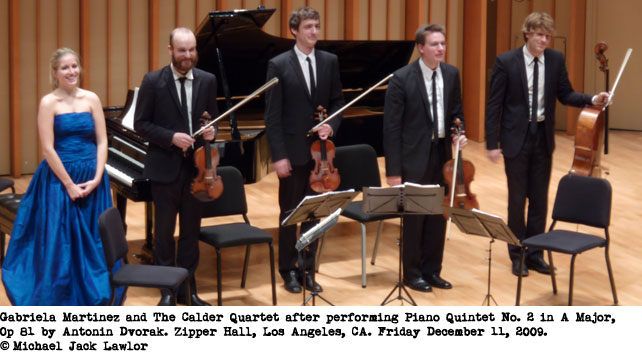
The Calder Quartet, whose members are graduates of the renowned Julliard School in Manhattan, performed Mozart’s G-minor Quintet at Zipper Hall in Los Angeles on March 22, 2009.
People adore this particular composition. Mozart evokes suffering and irony in a minor key and then, in a major key, resolves the tragic themes.
Imagine you are in the Los Angeles audience listening closely to the subtleties of the music.
Suddenly the concentrated warmth of the listening experience is broken.
Someone in the balcony has started to cough. He is producing a rattling, phlegmatic sound that mars the beauty of the music.
Several people turn their heads. One of the musicians seems to bristle. The offender surveys the audience from his perch on the balcony and coughs again. He seems to be competing with the musicians for the attention of the audience.
Mozart’s G-minor Quintet has become the soundtrack for the drama of his head cold.
Live musical performances, especially classical and art music concerts, are often delayed, marred, ruined, and spoiled by audience members who cough, hiss, wheeze, and even yell during events.
“I am of the very strong conviction that live performance is sure to ruin the musical experience for everyone,” said Jet Dee, author of “Nailing Shut the Coughin’: GPAADAK the First Step to Improving the Musical Experience.”
(The acronym GPAADAK stands for “Gould Plan for the Abolition of Applause and Demonstrations of All Kinds.”)

Dee, a musician deeply influenced by the ideas of the late Canadian pianist Glenn Gould, maintains that live performances of classical music are in fact anti-musical dilutions of the aesthetic experience.
The signs are everywhere. The aesthetic damage caused by noisy audience members is alluded to in the programs distributed at the Concert Hall in Los Angeles.
“As a courtesy to the musicians and your fellow patrons, please turn off all pagers, mobile phones, watch alarms, or other electronic devices prior to the concert, and refrain from talking, coughing, or unwrapping candy during the performance.”
Once in the hands of audience members, however, these programs often become a source of noise as people rifle through pages and roll publications up to tap out beats during concerts.
“I detest audiences. I think they are a force of evil.” Glenn Gould
In her article, Dee presents plenty of examples of conductors throwing down the baton when they cannot take audience noise and disruption any longer.
Sir Thomas Beecham admonished London audiences in 1934 for talking as he was conducting Fidelio, Beethoven’s only opera. Beecham threatened to restart the overture from the beginning every time someone spoke. In Glasgow in 1936, he turned to the audience during the conclusion of La Boehme and demanded that they “shut up!”
During a performance of Tristan and Isolde in Dallas in 1975 Jon Vickers, a tenor playing the part of Tristan, interrupted his performance of the dying lover to tell the audience to shut up and stop coughing.
In 1993 Alfred Brendal stopped a performance of Beethoven’s Moonlight Sonata at the Kennedy Centre in Washington and told the audience he would resume the concert when they had finished clearing their throats.
Kurt Masur walked off the stage without saying a word in the middle of a 1998 performance he was conducting with the New York Symphony due to the cacophony of coughing in the audience.
Michael Tilson Thomas left the stage in anger while conducting a symphony by Mahler in Miami that was marred by incessant hacking in the audience.
“I have seen bad behaviour first hand at various concerts,” said Dee.
The program of the last symphonic concert she attended, performed by the St. Louis Symphony Orchestra in 2008, included Bartók’s Piano Concerto No. 3 and Strauss’s Don Juan.
“During the evening, there were three distinct distractions coming from my immediate seating area. A man wearing patent-leather shoes kept rubbing his feet together. A person clothed in polyester had an itch that apparently couldn’t be sufficiently scratched, and some idiotic patron failed to turn off his cell phone which rang in the middle of the performance,” she said.
“All three of these events inevitably occurred within the pianissimos of the second movement of the Bartók Concerto, which is my favourite part. I was most incensed. I don’t really attend concerts much any more.”
Behavioural problems at concerts are legion. Christine Gengaro, assistant professor of music at Los Angeles City College, recalls a time when the hidden side of a companion’s character surfaced in the middle of a show.
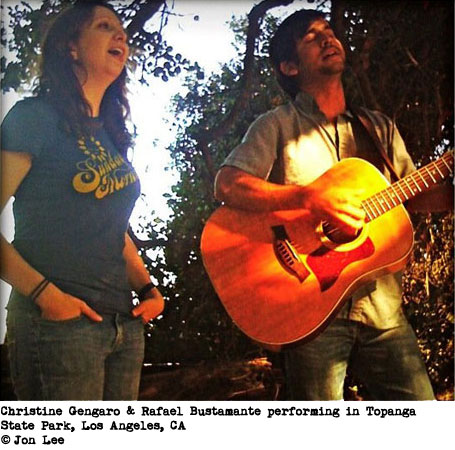
“I attended a Hollywood Bowl concert and the person I was with insisted on answering his phone during the concert. He’s screaming – can you hear me? – into the phone. I was mortified. I tried to suggest that he stick his phone where the sun didn’t shine, but he didn’t understand the rules of attending classical concerts. He didn’t care. Needless to say, I never went anywhere with him again.”
Sometimes people just can’t help making noise during a concert.
“I saw Hamlet on Broadway many years ago, right in the middle of the cold and flu season,” said Gengaro. “There was so much nose-blowing, sneezing, and coughing that I was completely distracted from the drama. I wanted to Lysol the entire theater.”
At the Calder Quartet performance in Los Angeles the noise reached a crescendo as the patron exploded in a fit of coughing that involved throwing his head back and forth and mixing the sound of rustling polyester with the sickly sound of phlegm.
After this discordant outbreak a security guard appeared on the balcony and led the man out of the auditorium. The concert continued without interruption and the audience listened with rapt attention to the music.
But more often than not concert halls are sealed shut when the music begins. Ushers and security personnel stand in the hallways outside, leaving musicians and audiences to their fate.
Throughout an April 2009 performance of Berlioz’s Symphonie Fantastique at the Concert Hall in Los Angeles, a man in the audience hollered incomprehensibly at the conductor. Like a fan at a sports event, he seemed to be shouting instructions in attempt to change the direction of the performance.
“Taking action creates more of a disturbance,” said Dee.
“I have seen, and heard, more than my fair share of musical moments ruined, not only due to loud and obnoxious spectators and hangers-on, but also by patrons who were trying to do the right thing by hissing and shushing everyone who dared make a noise,” she said.
“Neither of these extremes is desirable. Both create polarities which, in my opinion, should have no part of the musical environment. Indeed, they create more of a Coliseum-like atmosphere that can really induce all kinds of unwelcome anxieties and emotions in those hearts that are sincere enough to be attempting to convey something from the stage,” said Dee.
“I can honestly say that I do not recall ever feeling better about the quality of a performance because of the presence of an audience.” Glenn Gould
Gengaro points out the fact that concerts are not performed in a perfect world.
“Musicians understand that certain noises – coughs and sneezes – are inevitable at live events. We try our best as audience members to control our own coughing and sneezing. We’re disappointed when a noise enters at the absolute wrong time – during that crucial rest – but we all understand that life is imperfect.”
However, there are limits to what listeners will endure.
“When someone’s really being a jerk, however, you have to make a choice. Which is going to be less disruptive: the idiot making noise or me telling the idiot to shut up,” Gengaro said.
Audiences have been known to abuse performers with noise.
Roberto Alagna, a tenor, was booed off the stage during a performance of Aida at La Scala opera house in Milan in 2006.
The Los Angeles Time reported audience reaction in April 2009 after the Polish pianist Krystian Zimerman criticized American foreign policy from the Concert Hall stage:
“About 30 or 40 people in the audience walked out, some shouting obscenities. Others remained but booed or yelled for him to shut up and play the piano.”
“There is a very curious and almost sadistic lust for blood that overcomes the concert listener.” Glenn Gould
The tension between audiences and performers is not restricted to the worlds of classical and art music.
“During various shows by bands and performance artists, there have been audience members who threw things, who yelled loudly to try and disrupt the proceedings, who beat on chairs – in fact, a friend of mine actually had a student’s desk thrown at him on stage by a drunken fool during a concert. I have seen performers pulled, unwittingly, into crowds that seemed to have no respect for their well-being,” said Dee.
Mario, a bartender at the Silver Lake Lounge on Sunset Blvd in Los Angeles has seen people talk right through entire acoustic performances. “People just don’t care,” he said. A sign in the doorway of the lounge reads, “Please don’t chit chat during acoustic performances.” People ignore it.
Jerry Scott, first place winner in the Finger Style Guitar competition in the 2009 Topanga Banjo Fiddle Contest knows how to handle unruly audiences.
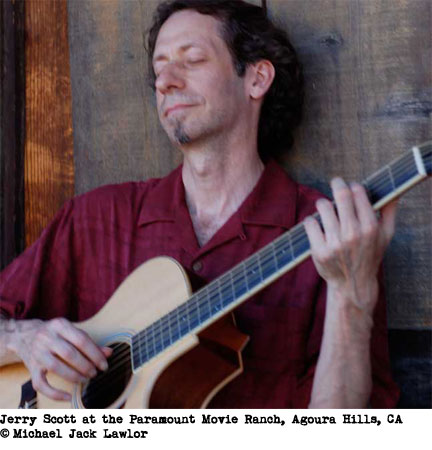
“I’ve cut a few gigs short because of audience noise levels. My dream is to perform for an attentive, focused, quiet audience who I can take along with me on my musical journeys,” he said.
Christine Gengaro takes a practical approach to the reality of audience noise.
“I hear the noise, but unless it’s ridiculously loud, it doesn’t distract me. I always tell my students to try practicing now and then with other background noise. It helps hone concentration. And if you’ve ever played an open mic night, you know that you’re going to be competing with waitresses taking orders, and drunk people being rowdy, and other noises. You have to be able to keep focus among those things.”
Audience members, however, are resourceful when it comes to finding ways to interfere with performances.
“People come up to me mid-song and start talking, which of course is a huge disruption,” said Scott.
“I earnestly believe that recording is the best means to experience music,” said Dee.
“I know what I am getting into when I agree to go to a performance. I have no room to really complain. Recently I promised a friend that I will attend his live performance. This will be the second live performance I have attended this year. Hopefully it will be the last.”

Read Nailing Shut the Coughin’: GPAADAK as the First Step to Improving the Musical Experience by Jet Dee.
Explore Christine Gengaro’s insightful essays at Tales from a Whales Belly.
Visit Jerry Scott’s website and listen to his original recordings.
Watch the Calder Quartet perform Mozart’s “Dissonance” Quartet K.465 and other beautiful music.
To learn more about Glenn Gould, visit Glenn Gould: Variations on an Artist, a website maintained by the Canadian Broadcasting Corporation.











I love this story!
Oh yes, I experience these kinds of behaviors at concerts all the time. Sometimes I wonder if people save their sneezes & coughs for the concert halls.
However, I was so surprised this past Christmas when I went to see the Boston Ballet’s Nutcracker. A full house in a very large venue, full of small children, at the height of flu season, and the performance was so utterly captivating that there was barely a noise from the audience other than wild applause and gasps of pleasure. This in a house FULL of children, mind you.
So I wonder, is it that people attending concerts are really acting out their boredom and reluctance to be there by coughing, wheezing, forgetting to turn off cell phones, etc…??? I wonder…. and then they make up for it by giving a standing ovation to the most ordinary of performances.
elitist scum.
Wow, I had no idea Glen Gould was such a douche.
Candy wrappers, cell phones, whispered conversations, rude.
Having to cough is not rude.
Anyone who has seen more than one orchestra performance has seen musicians cough on stage.
But John Cage remarked that there were no more coughs than normal at musical performances. Everyone noticed coughs at a performance because they had finally started to listen. He says it again in the PBS American Masters program I show classes every year. The music’s working, in that sense. Cage also told me, laughing, when I complained about interruptions, “but life is interruptions, isn’t it? So perhaps we should learn to enjoy them?” These days, when, as a late class ends, car horns from people coming to pick up their friends downstairs make a background for my lecture I hear other profs slamming windows shut. It’s really the performer’s tension which distracts the audience, not the sound. I just laugh tell them it’s Cagean background music and everybody relaxes and enjoys the end of the lecture. It’s a Taoist approach. Best, GL, San Francisco State University
The best audience for music: a mute, paralyzed from the neck down, and dosed with a pint of Theraflu.
Worst audience: people who express their liking for music in a way other than a
synaptic orgasm.
Best relationship between musician and audience: a shared evening of mutually exclusive introversion..
I go along with Jon. I have been in smallish rooms with Ellington, Kyung Wa Chung, and Clapton.
Not halls, not arenas, rooms. Neither coughs nor applause really matter. If anything, applause is far moreo irritating than coughs.
Just found amusing the reference to Alfred Brendel stopping his performance at the Kennedy
Center and threatening not to resume unless the coughing stopped, since I believe he is one
of those pianists who is infamous for groaning and moaning over his own playing as though
in the throes of unbearable suffering or of pre-orgasmic ecstacies. I can’t imagine the
coughing of his audiences being more annoying than his own extraneous noise.
“At the Calder Quartet performance in Los Angeles the noise reached a crescendo.”
I think you mean “reached a climax”.
It is surely shocking that some audience members actually don’t CARE if they are spoiling other peoples’ enjoyment.
And it’s not much better than some coughers appear quite unaware of the effect of their coughing on others.
On the other hand, I fear Glenn was, and Jet is, a perfectionist. Perfectionism is unhealthy.
Some audience members who
“I can honestly say that I do not recall ever feeling better about the quality of a performance because of the presence of an audience.” Glenn Gould
What a shame! As a professional dancer, I’m sorry that he hasn’t had that experience. To me, nothing enhances a performance like a lively audience.
I find it a little odd that live entertainment in a lounge is expected to be received in rapt silence…or perhaps I’m misunderstanding the term ‘lounge’? After all, in a concert setting, the audience has (we hope) come to see the performance. In a lounge or other informal setting, the patrons are there to relax, socialize, and enjoy themselves. From first-hand experience, I can say that performing in these venues can be disheartening. But this is the tradeoff for regular, bread-and-butter work, particularly in the early stages of a career; we get to earn a little cash and gain experience and exposure in the world of professional performing arts in return for providing a little background atmosphere at a place with a bartender. When I dance at a restaurant, I don’t expect the patrons to put down their forks, ignore their dinner companions, and pay rapt attention to me, because the evening is *not* about the performer in that situation. We are just providing one piece of the experience they’re paying for.
Music should be the absence of pleasure. Music should be lifeless.
If the goal of music is to give someone an experience, it should be noted that this experience is achieved emotionally; listening to music is not the great exercise in intellectual activity that studying compositions may be.
The point? Music changes you on a biological level when its worth its weight. Your pulse, the rhythm of your breath, they change! Are we to sit still through these changes, and become completely out of touch with the experience our minds and bodies are having? You may be attentive and you may enjoy yourself, but the essence of the music, the very purpose of the music–its spirit, is lost when its heard from a position of paralysis in an uncomfortable chair.
Classical music is suicidal.
I am saddened to see this article. What about the thrill of live performance, the vulnerability, the not-knowing-in-advance, the social experience, the sensuous sensations. Of course it’s great to have recordings that enable us to hear music again and again, or to hear music we otherwise have no access to. But to deny the power of live performance because people make noise is to deny the very on-the-edge experience of in-the-moment music-making.
Classical music, like other music, can provide deep and rich experiences. Yes, it would be great if all halls had comfortable chairs. But they don’t – and true of other musics as well. It doesn’t matter when you’re sitting on the edge taking in the music and theatre of live performance.
I’m very puzzled by this article. As a visual artist, I was taught that everything that the viewer sees is part of the visual experience, not just what is within the confines of the canvas (or sculpture, installation, etc.), which is why gallery and museum exhibitions are set up in particular ways, paying attention to the dynamics of the room, the lighting, etc. The idea is not to create a completely sterile environment, but an active one that, while it is visually quiet, is not mute. Other visitors are part of how one experiences the art.
With music performances, that is all the more true. Popular music thrives on audience participation, and in fact requires it to become fully present. The emotional response of the audience is an essential part of the show. Attending a rock concert where everyone is quiet would be downright bizarre.
Classical music evokes highly emotional responses as well, and while it may not be appropriate to whoop and holler, because of the intense and focused nature of that style of music, I want to see other audience members be moved, and be human. Coughing and shifting in one’s seat is natural, and I welcome it. It’s an integral part of appreciating the music collectively.
This article is a perfect example of the ivory tower that artists live in. WE pay to see you. Our tax dollars allow you the liberty of devoting your life to art (as opposed to getting a real job).
Silly artsies.
The attitude of requiring audiences to be silent is comparatively recent and to my mind way too clinical and dull. It’s refreshing to be in a classical concert in India where the audience is as involved as a good jazz audience, making lots of little sighs and gasps of appreciation, just as it was for most of “classical music”‘s history in the West.
Thank god I play in an amplified band where audience participation is not a problem – in fact, the lack of it is a problem. No wonder I rarely sit through church-like classical concerts these days.
Mostly i disagree with this “precious” model of music performance.
I am a connoisseur and participant in Indian classical music which demands audience participation in the form of spoken encouragement when the artist does something worthy of comment – perhaps this is a function of the nature of the music – mostly improvised – just as we see the same kind of audience feedback in live Jazz. It seems to me that if you want total silence while performing, make a recording – we are human and as such are social, emotional, connected beings – we need interaction.
That said, it is rude and thoughtless to make noise that is unconnected to the performance, chatting, texting, eating, etc
Glenn Gould was mad as a box of frogs and suffered from numerous psychological problems including paranoia, which explain his feeling that the audience was out to get him.
Music is not just some theoretical exercise, it is a form of communication and as such works best live.
It is true that occasionally audiences misbehave but in my experience as someone who has attended classical concerts for more than 30 years, it is rare. The coughing can be annoying but it isn’t caused by rudeness but by the precious attitude of some performers.
If you say to someone, “Don’t think about pink elephants” they will. If you (implicitly) say “Don’t cough!” it will make people think about it and cough involuntarily – very few people who cough in concerts do not feel self-conscious about it and wish they could stop.
As for mobile phones, well that’s a different matter…
I think many responders here have valid points but still misunderstand the author’s argument.
Right, a “sterile” concert environment is anathema to music performance, but Mr. Lawlor doesn’t call for sterility, just respect.
I agree that genuine emotional responses to the music can enhance the experience for everyone and create a mutually supportive relationship between audience and performers. But coughing and sneezing are not emotional responses. They may be involuntary, but if chronic, you should at least step out until you feel better.
Cell phone chatter is indefensible. It shows you don’t care about what’s right in front of you. If not, then leave, instead of forcing your irrelevant conversation on those who still care about the music.
Certainly performers and listeners should have different expectations in a multi-use venue, like a cafe or town square, but people gather in a concert hall for one purpose. If you care about the music and musicians on the stage, stay and respond genuinely and supportively. If not, please see yourself out.
Yes, a concert should be a collective, interactive musical experience. That’s why the audience should be as committed to the quality of that experience as the performers.
the conductors of clasical music are snobs pure and simple !! its just music nobody really cares be
because these people spend every waking moment devouring Motzat or Beetoven lol !! get a life and
compose something yourself morons !! or just stay home in your dens and listen to your albums of ins
insanity ~’
I myself listen to electric music and can cough, sneeze and scratch all I want !!
I feel so much happier now I understand all this. Thanks!
I think it’s damn right. Why should a pianist who has probably slaved for months on a Rachmaninov concerto, or a mezzo pouring their heart and soul into Dido’s Lament, have their hard work spoiled by a man who can’t stop blustering and sputtering all the time. Perhaps audiences need to realise that the money they pay for a professional concert ticket is nothing compared to the emotion they will recieve from a performer, and that they ought to respect that. I make all efforts to stay as silent as a mouse, so why should MY evening be disrupted too?